

What is Epoxy Flooring?
Epoxy flooring is a seamless floor coating made by mixing epoxy resin with a hardener. That mixture creates a chemical reaction that cures into a rigid, durable surface designed to resist stains, chemicals, impact, and daily wear. It is a popular DIY flooring option for garages, basements, workshops, and modern living spaces.
Unlike regular floor paint, epoxy does not simply dry on top of concrete. It cures into a hard coating that bonds to the prepared surface below. When applied correctly, epoxy can transform plain concrete into a polished, long-lasting floor that is easier to clean, more attractive, and better protected from spills, tools, tires, foot traffic, and everyday use.
Table of Contents
- What Are the Different Types of Epoxy Flooring?
- What Are the Benefits of Epoxy Flooring?
- Where Can You Use Epoxy Flooring?
- How Is Epoxy Flooring Applied?
- How Much Does Epoxy Flooring Cost?
- How Long Does Epoxy Flooring Last?
- Frequently Asked Questions
What Are the Different Types of Epoxy Flooring?
The main residential epoxy flooring styles are flake epoxy flooring, metallic epoxy flooring, and solid color epoxy flooring. While all three provide the same durable, seamless protection epoxy is known for, they offer very different appearances and levels of texture.
Flake flooring is the most popular choice for garage floors and workshops because it adds visual texture and natural slip resistance. Metallic flooring creates bold, marble-like movement for homeowners looking to make a statement in garages, basements, or living spaces. Solid color epoxy offers a clean, uniform finish that complements modern and minimalist designs. The right choice depends on where the floor will be installed, the overall design you're trying to achieve, and whether you prioritize decorative effects, added traction, or a simple, streamlined appearance.
Flake Epoxy Flooring

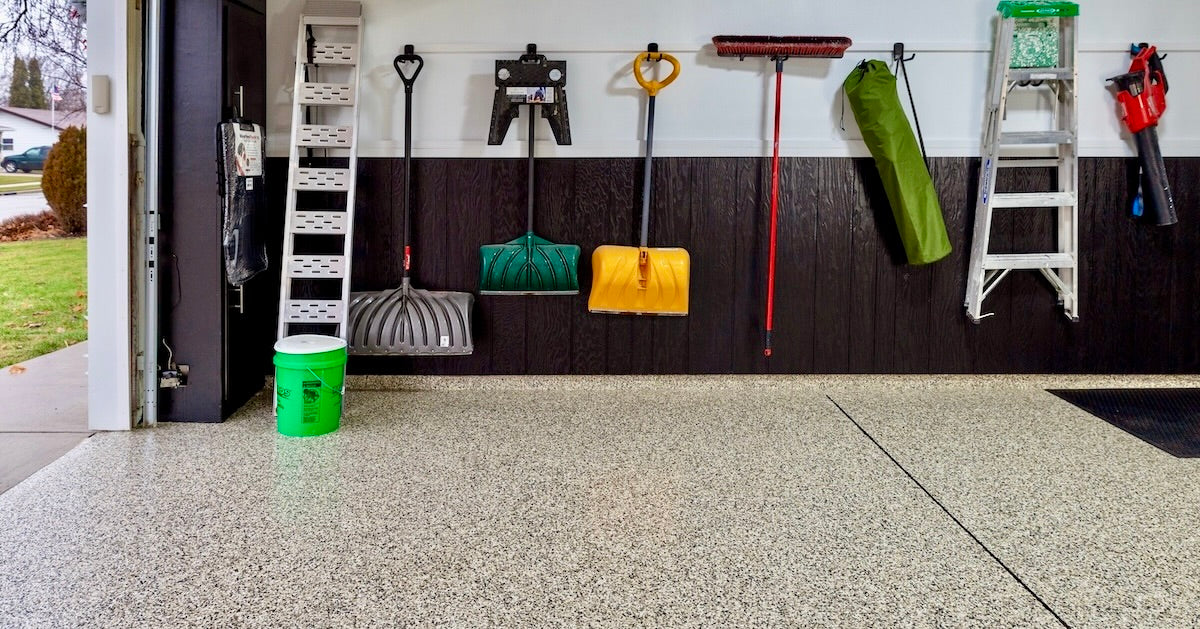
A flake epoxy floor coating is created by broadcasting colored vinyl or polymer chips across a wet epoxy base coat. The flakes become embedded in the coating, creating a textured, terrazzo-inspired finish with added depth and color variation. Flakes are available in a wide range of colors, sizes, and blends, allowing homeowners to choose anything from a subtle neutral finish to a bold, high-contrast design.
This style is one of the most popular residential flooring options for garages, basements, laundry rooms, workshops, and home gyms. The layered pattern helps disguise minor concrete imperfections, dust, dirt, tire marks, and everyday wear better than a smooth, single-color surface. The flakes also add texture to the floor, which can improve traction compared to a standard glossy epoxy coating.
Flake flooring is especially practical for garages because it creates a clean, professional appearance without making the space difficult to maintain. The durable, seamless coating helps protect the concrete from oil, automotive fluids, road salt, moisture, tools, and vehicle traffic. Because there are no grout lines or seams, the finished floor can usually be cleaned with routine sweeping and occasional mopping.
The amount of flake used can also change the final appearance. A light broadcast allows more of the base coat to remain visible, while a full broadcast covers the surface more completely and creates a denser, more consistent pattern. After the flooring flakes are applied, loose material is removed, and the floor is sealed with a protective topcoat. This locks the chips in place, creates a more uniform finish, and adds another layer of protection against scratches, stains, and daily use.
Learn how to install an epoxy flake floor over concrete.
Metallic Epoxy Flooring

Metallic epoxy flooring uses pigments blended into clear or tinted epoxy to create a marbled, three-dimensional effect across the surface. As the coating flows and cures, the pigments move through the epoxy and form natural variations in color, depth, and pattern. The finished floor can resemble flowing stone, polished marble, or other organic designs, depending on the colors selected and the application method used.
This style is popular in showroom-style garages, finished basements, and modern living areas where the floor is intended to become part of the overall design. Unlike flake flooring, which creates a more uniform and textured appearance, metallic epoxy produces a one-of-a-kind finish. No two floors look exactly the same because the pigments continue to shift and blend as the coating is poured, moved, and allowed to settle.
Metallic floors also provide the same seamless, easy-to-clean surface associated with other epoxy systems. When applied over properly prepared concrete, the coating helps protect against stains, spills, moisture, foot traffic, and everyday wear. A protective topcoat is typically added after the metallic layer cures to improve scratch resistance, durability, and long-term performance.
Learn how to install a metallic marble epoxy floor over concrete.
Solid Color Epoxy Floors
Solid color epoxy floors creates a smooth, uniform finish using one consistent color across the entire surface. It is a straightforward option for homeowners who want a clean, minimal look without metallic movement or heavy pattern variation.
A solid color epoxy flake floor can be created by using a solid color polymer floor flake, while a solid color poured epoxy floor can be created using one or more liquid epoxy dyes uniformly blended to create a consistent color.
This versatile style works well in garages, workshops, utility rooms, basements, storage areas, and modern interiors where simplicity is the goal. Neutral shades such as gray, tan, white, and charcoal create a polished, understated look, while brighter offer a more customized finish.
What Are the Benefits of an Epoxy Floor?
Epoxy floors are valued for durability, stain and chemical resistance, low-maintenance cleaning, design flexibility, and long-term cost savings. Epoxy turns plain concrete into a polished surface that can handle everyday use while improving the look of the space.
- Extreme durability: Epoxy is built to handle foot traffic, vehicle weight, rolling toolboxes, dropped tools, and regular use without the surface wear you often see with bare concrete. Its hard, bonded surface helps protect the slab underneath from abrasion and repeated impact.
- Stain and chemical resistance: A properly cured epoxy floor creates a non-porous surface that helps repel water, oil, gas, automotive fluids, and common household spills. This gives homeowners more time to clean up messes before they soak into the concrete and leave permanent stains.
- Low-maintenance and hygienic: Epoxy flooring has no grout lines to trap dust, dirt, mold, or bacteria. Most floors can be maintained with regular sweeping and occasional mopping. The seamless finish makes it easier to remove debris from the entire surface.
- Aesthetic customization: Epoxy floors can be made glossy, subtle, bold, modern, industrial, or stone-inspired depending on the system, color, flakes, metallic pigments, and finish used. This flexibility allows the floor to match the function and design of the surrounding space.
- Long-term value: While epoxy costs more upfront than basic concrete paint, it can reduce the need for frequent repainting, surface repair, and concrete cleanup over time. A properly installed system can continue protecting and improving the appearance of the floor for decades.
Where Can You Use Epoxy Flooring?
Epoxy flooring is most commonly used in residential garages, basements, workshops, laundry rooms, and home gyms because these spaces benefit from a durable, seamless surface that is easy to clean and resistant to spills, stains, and regular wear. It can protect bare concrete while giving the room a more finished, polished appearance.
Residential Uses
Epoxy flooring works in nearly any residential concrete space, but it is most popular in garages, basements, laundry rooms, and home gyms. These areas benefit most from a seamless, easy-to-clean surface that stands up to moisture, spills, and heavy daily use while giving bare concrete a finished look.
- Garages and workshops are the most common residential applications. Epoxy protects concrete from tire marks, oil stains, road salt, moisture, and daily wear. Decorative flakes or solid colors can also give the garage a cleaner, more finished appearance.
- Basements and laundry rooms are good candidates because epoxy creates a seamless surface that is easy to clean and helps protect the concrete from everyday moisture and spills. Its smooth finish can also make these utility spaces feel brighter and more complete.
- Living spaces and kitchens can use epoxy for a modern, industrial, or stone-inspired look. Metallic finishes are especially popular when the floor is part of the design. Because epoxy is available in a wide range of colors and effects, it can be customized to complement cabinets, furniture, and surrounding finishes.
- Home gyms benefit from epoxy because the surface is easy to clean and durable enough for fitness equipment, mats, and regular movement. A non-skid additive can also be used to improve traction in areas where stability is important.


Commercial and Industrial Uses
Epoxy flooring is also common in commercial kitchens, retail spaces, showrooms, healthcare settings, warehouses, gymnasiums, and manufacturing facilities. These spaces need floors that are easy to clean, resistant to spills, and strong enough for frequent traffic or equipment use.


How Is Epoxy Flooring Applied?
Epoxy flooring is applied in three main phases: surface preparation, priming with a moisture sealant, and application of the base coat and topcoat. Each phase plays a specific role in helping the coating bond correctly, cure evenly, and hold up over time.
Surface preparation is the most important phase because most coating failures come from poor cleaning, inadequate concrete profiling, trapped moisture, or weak bonding. The concrete must be solid, clean, dry, and properly prepared before any coating is applied. Once the surface is ready, the moisture seal helps create a more stable foundation for the flooring system, followed by the decorative base coat and protective topcoat.
The exact products and application requirements vary by system, but the overall goal is the same: create a strong bond between the coating and the concrete while building a durable, long-lasting finish.
Learn how to prepare concrete for an epoxy floor coating.
How Much Does an Epoxy Floor Cost?
Professional epoxy flooring installation commonly falls around $3 to $12 per square foot, with many garage floor projects landing in the mid-range depending on surface condition, project size, product type, and labor. DIY epoxy flooring materials usually cost less per square foot, around $0.50 to $2.50, but homeowners still need to plan for prep tools, crack repair, and coating accessories.
Cost also changes by system. Basic water-based products are usually on the low end. Decorative flake systems and metallic systems fall higher because they include more materials and more design steps. Polyaspartic topcoats can increase the upfront cost but may improve scratch resistance, UV protection, and long-term durability.
Estimated Epoxy Flooring Cost by Project Size
| Project Size | Approximate Size | Professional Installation | DIY Installation |
|---|---|---|---|
| 1-Car Garage | 200-300 sq ft | $800-$3,000 | $200-$1,500 |
| 2-Car Garage | 400-500 sq ft | $1,600-$5,000 | $400-$2,500 |
| 3-Car Garage | 600-850 sq ft | $2,400-$8,500 | $600-$4,250 |
| Large Basement or Retail Space | 1,000 sq ft | $4,000-$10,000+ | $1,000-$5,000 |
Actual costs vary depending on the condition of the concrete, the flooring system selected, decorative finishes, surface preparation requirements, and local labor rates.
Stone Coat Epoxy Flooring Kits are designed to help homeowners lower the cost of a professional-looking floor. Stone Coat Epoxy Flake Flooring Kits are listed at $1.99 to $2.50 per square foot, while the Stone Coat Epoxy Marble Flooring Kits are listed at $3 to $5 per square foot. Flake flooring includes added traction from the broadcast chips, while metallic flooring should use a non-skid floor additive when slip resistance is needed.
Additional costs to plan for may include grinding, crack and divot repair, and equipment rental. Diamond grinding typically costs about $2 to $4 per square foot and is used to open the concrete pores so the coating can bond properly. Crack and divot patching may add another $1 to $5 per square foot depending on the extent of the damage, while renting a commercial floor grinder can cost about $300 to $600 per day. For minor cracks and small surface repairs, Stone Coat Floor Patch Epoxy Gel may offer a more affordable alternative to larger-scale repair work or equipment rental.
How Long Does an Epoxy Floor Last?
A properly installed, 100% solids epoxy floor can last 10 to 20 years in many residential settings. When the concrete is prepared correctly, and the floor is protected with a high-quality topcoat, that lifespan may extend to 20 to 30 years or more. Actual performance depends on the coating system, surface preparation, moisture conditions, sunlight exposure, traffic level, and routine maintenance.
What Shortens the Lifespan of an Epoxy Floor?
Poor concrete preparation is one of the biggest reasons epoxy floors fail. Epoxy is a coating, not a penetrating paint. If the concrete is not properly cleaned, profiled, and repaired, the coating cannot bond correctly. Even a high-quality epoxy system may peel or lift early when it is applied over a poorly prepped surface.
Moisture vapor emission can also cause problems. If moisture rises through the slab, it can create bubbles, peeling, or delamination even when the floor looks good at first. Testing the concrete for moisture before installation helps identify conditions that may require a moisture-blocking primer or additional preparation.
Hot-tire pickup can happen when heat from vehicle tires softens a weak or poorly bonded coating. As the tires cool and contract, they can pull the coating away from the concrete. Proper surface preparation and a durable protective topcoat can help reduce the risk of this type of failure.
How to Maximize the Life of Your Epoxy Floor
Apply a Polyaspartic Topcoat: A protective topcoat adds another layer of durability over the epoxy and helps guard against scratches, scuffs, stains, and everyday wear. Depending on the product, it can also improve UV resistance and help reduce yellowing or fading in areas exposed to sunlight.
Sweep and Mop Regularly: Routine cleaning removes sand, metal shavings, dirt, and other sharp debris that can create micro-scratches and dull the finish over time. Use a soft broom, dust mop, or vacuum for loose debris, followed by occasional mopping with a cleaner approved for coated floors.
Wipe Up Spills Immediately: Clean up automotive fluids, oils, chemicals, and other spills as soon as possible to help preserve the coating and prevent staining or surface damage. Even though epoxy is highly resistant to many common spills, prolonged exposure to harsh substances can still affect the finish.
Use Protective Mats: Place mats under toolboxes, heavy machinery, workout equipment, or parked vehicles to reduce gouging, concentrated pressure, and tire friction. Protective mats are especially useful in high-use areas where the same equipment or vehicle remains in place for long periods.
Ready to Transform Your Floors with Epoxy?
Epoxy flooring is one of the most durable and cost-effective ways to upgrade concrete, but the quality of the finished floor depends on much more than the coating itself. Proper surface preparation, the right products, and correct application techniques are what determine whether your floor performs beautifully for decades or begins to peel, bubble, or wear prematurely.
With the right system, achieving professional-looking results is well within reach for DIYers. Stone Coat Flooring Kits are designed to simplify the process with premium materials, detailed instructions, and step-by-step training to help you complete your project with confidence. Whether you're transforming a garage, basement, workshop, or living space, you'll have the tools and guidance needed to create a floor that looks great and is built to last.
Ready to get started? Explore Stone Coat Countertops DIY Flooring Kits and find the right system for your next project.
Shop Stone Coat Flooring Epoxy Kits
Frequently Asked Questions
Is epoxy flooring a good idea?
Yes, epoxy flooring is a durable and cost-effective choice for garages, basements, workshops, and home gyms. It creates a seamless, easy-to-clean surface with strong stain and chemical resistance. The main tradeoffs are that it can be slippery when wet and requires thorough surface preparation to prevent peeling.
Do epoxy floors crack?
Epoxy itself does not usually cause cracking, but it can crack or flake if the concrete slab underneath shifts, settles, or already has cracks that were not repaired before installation. Proper crack repair and concrete preparation help reduce the risk of visible cracking later.
Is epoxy flooring waterproof?
Fully cured epoxy is highly water-resistant and effectively waterproof against everyday spills, splashes, and surface moisture. However, it is not a substitute for a vapor barrier. If moisture rises through the concrete slab from underneath, it can still create bubbling, peeling, or delamination.
Is epoxy flooring better than tile?
It depends on the space. Epoxy offers a seamless, chemical-resistant surface with no grout lines, making it a strong choice for garages, workshops, and heavy-use areas. Tile offers more design variety and may perform better in sunlit spaces unless the epoxy system includes the right UV-stable protection.