

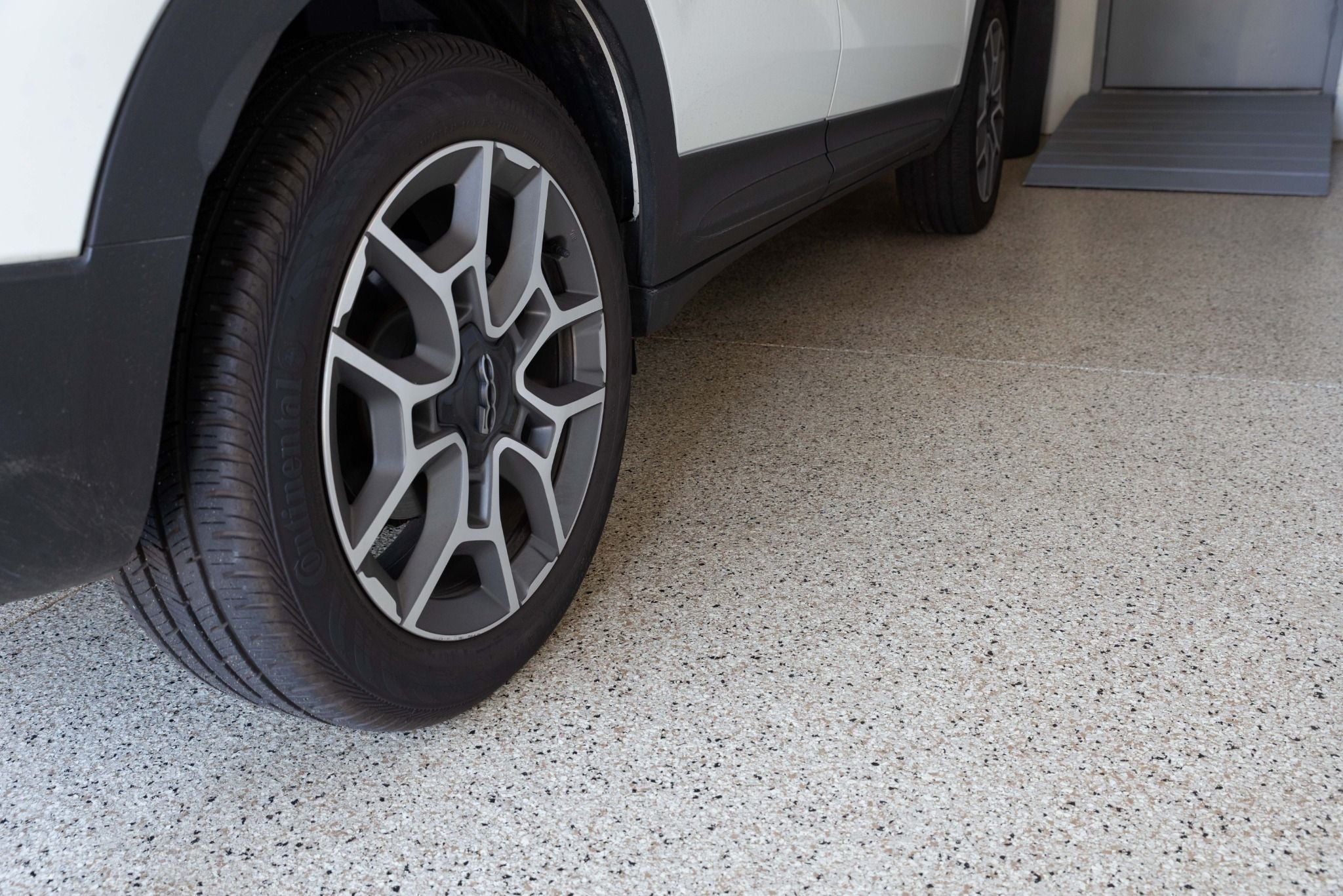
El suelo de su garaje se ve más de lo que usted piensa.
Para muchos hogares, el garaje es la verdadera puerta de entrada. Es por donde entran los niños después de la escuela, donde se descargan las compras, y por donde pasan zapatos embarrados, neumáticos mojados, restos de césped y serrín antes de entrar en la casa.
Y cuando el suelo es de hormigón desnudo, toda esa suciedad suele quedarse ahí.
El hormigón atrapa el polvo de forma natural, absorbe las manchas y desprende partículas finas que se introducen en la casa. Con el tiempo, incluso un garaje limpio puede empezar a parecer polvoriento, desgastado o inacabado simplemente por el suelo que tiene debajo.
Esa es una de las razones por las que los suelos de garaje se han convertido en una mejora tan popular.
La mayoría de los propietarios subestiman el impacto de renovar el suelo de su garaje. La verdad es que no necesita una reforma completa para transformar el espacio. Solo necesita el sistema adecuado.
Esta guía analiza las ventajas, las limitaciones y los mejores casos de uso de los suelos de epoxi para garajes, y responderá a una pregunta: ¿es el suelo de epoxi la elección correcta para su garaje y, en ese caso, qué sistema de Stone Coat le permitirá lograrlo?
¿Por qué son populares los suelos de epoxi para garajes?
Los suelos de epoxi son un sistema de recubrimiento compuesto por una resina de dos componentes y un endurecedor que, al fraguar, crea una superficie duradera y sellada sobre hormigón debidamente preparado.
A diferencia del hormigón desnudo, el suelo de epoxi crea una superficie más fácil de limpiar y más resistente a las manchas, los derrames y el desgaste diario, a la vez que ofrece una amplia gama de opciones de diseño personalizables para adaptarse al estilo y la función del espacio.
A medida que los garajes siguen evolucionando más allá de ser simples espacios de estacionamiento, el suelo adquiere más importancia que nunca. Los garajes actuales se utilizan a menudo como talleres, gimnasios domésticos, espacios para pasatiempos, áreas de almacenamiento o extensiones de la propia casa. Ese cambio ha impulsado una mayor inversión en mejoras para el hogar y en espacios habitables funcionales, convirtiendo las renovaciones de garajes en una de las tendencias de mejora del hogar de mayor crecimiento.
El sistema de suelo de epoxi adecuado ayuda a respaldar todo esto.

Los beneficios del suelo de epoxi en espacios de garaje
El suelo de un garaje necesita hacer algo más que verse bien; necesita soportar la vida real.
Desde el tráfico de vehículos y herramientas pesadas hasta derrames químicos, humedad, suciedad y el constante tránsito de personas, los garajes ejercen más presión sobre el suelo que casi cualquier otra área de la casa. Los sistemas de suelos de epoxi de Stone Coat están diseñados para manejar esas demandas mientras ofrecen una apariencia limpia y acabada que realza todo el espacio.
Una de las mayores ventajas del suelo de epoxi es la durabilidad. Los sistemas correctamente instalados resisten abrasiones, impactos, el desgaste de los neumáticos calientes y muchos productos químicos comunes tanto automotrices como domésticos. El aceite, los limpiadores, la sal de carretera y los derrames de taller tienen muchas menos probabilidades de dañar la superficie en comparación con el hormigón desnudo.
El suelo de epoxi también simplifica el mantenimiento. Dado que la superficie está sellada y no es porosa, el polvo, los restos, los líquidos y las manchas permanecen en la parte superior en lugar de absorberse en el hormigón. Barrer se vuelve más fácil, los derrames se limpian rápidamente y el garaje se mantiene más limpio con menos esfuerzo continuo.
Otra ventaja importante es la versatilidad de diseño. Los propietarios pueden elegir entre una amplia gama de estilos dependiendo de cómo se utilice el garaje. Los sistemas de escamas decorativas proporcionan textura, tracción y una apariencia más enfocada a la utilidad, mientras que los sistemas metálicos tipo mármol ofrecen un acabado audaz y personalizado para garajes diseñados para sentirse más como salas de exposición o espacios de pasatiempos.
Los sistemas de suelos modernos también han evolucionado para alinearse mejor con las expectativas de los propietarios tanto en rendimiento como en la experiencia de aplicación. Los productos de Stone Coat Flooring están formulados con tecnología de bajo olor y bajos COV, lo que ayuda a crear un entorno de instalación más cómodo en comparación con muchos sistemas de recubrimiento tradicionales a base de solventes. Combinados con métodos de aplicación aptos para el bricolaje y un rendimiento de nivel profesional, estos sistemas facilitan que los propietarios logren suelos de garaje duraderos y de alta calidad sin sacrificar la utilidad ni la flexibilidad de diseño.
El resultado es un suelo de garaje que equilibra la durabilidad, un mantenimiento más sencillo y un diseño personalizado de una manera que el hormigón desnudo simplemente no puede igualar.
Las limitaciones y desventajas de los suelos de epoxi para garajes
El suelo de epoxi puede mejorar drásticamente el aspecto y la función de un garaje, pero el rendimiento a largo plazo depende en gran medida de una preparación adecuada, la instalación y la elección del sistema correcto para el espacio.
El mayor problema detrás de la mayoría de los fallos en suelos de epoxi es una preparación deficiente de la superficie. Algunas estimaciones de la industria atribuyen hasta el 80% de los fallos de recubrimiento a un trabajo de preparación inadecuado. Si el hormigón no se limpia, repara, perfila y prueba correctamente contra la humedad, es posible que el recubrimiento no se adhiera bien. Con el tiempo, esto puede provocar descamación, burbujas, grietas, astillado o delaminación.
La humedad es otra gran preocupación. El hormigón retiene y transfiere humedad de forma natural, y si el vapor atraviesa la losa, puede debilitar la adhesión y, con el tiempo, hacer que secciones del recubrimiento se levanten o fallen. Es fundamental realizar pruebas de humedad y elegir un imprimador adecuado antes de comenzar la instalación.
No todos los sistemas de epoxi funcionan igual bajo la luz solar o con un uso intensivo del garaje. Los recubrimientos de epoxi estándar pueden amarillear con la exposición prolongada a los rayos UV, especialmente cerca de las puertas del garaje o las ventanas. Es por eso que los sistemas de suelos de epoxi de Stone Coat incorporan capas de acabado de poliaspártico estables a los rayos UV para una mejor estabilidad del color y protección a largo plazo.
Los niveles de tráfico y las condiciones del suelo también importan. Los garajes de alto tráfico, entornos de taller y áreas expuestas al movimiento de vehículos pueden experimentar patrones de desgaste con el tiempo. Los suelos con una preparación incorrecta o capas de acabado más débiles pueden volverse más vulnerables a arañazos, descamación, grietas, manchas químicas o levantamiento por neumáticos calientes.
La resistencia al deslizamiento es otra consideración importante que los propietarios a menudo pasan por alto. Las superficies de epoxi lisas no son inherentemente antideslizantes y pueden volverse resbaladizas cuando están mojadas. Por esa razón, los sistemas de suelo de epoxi de Stone Coat incorporan escamas decorativas, granos antideslizantes o aditivos de tracción para mejorar la seguridad y la facilidad de uso diaria.
La instalación y el curado también requieren paciencia. Aunque el suelo de epoxi puede sentirse seco relativamente rápido, el curado completo y la dureza máxima requieren tiempo. Devolver los vehículos a la superficie demasiado pronto puede comprometer la durabilidad a largo plazo y aumentar el riesgo de daños antes de que el recubrimiento haya curado completamente.
Los cambios de temperatura también pueden afectar el rendimiento. Algunos recubrimientos de epoxi rígidos pueden volverse más quebradizos en entornos de calor y frío extremos, por lo que la selección correcta del sistema es especialmente importante en garajes expuestos a cambios de temperatura estacionales.
Y aunque los suelos de epoxi son altamente duraderos cuando se instalan correctamente, los recubrimientos fallidos pueden ser difíciles y laboriosos de reparar. En muchos casos, los recubrimientos dañados deben ser eliminados mecánicamente antes de que la superficie pueda ser recubierta adecuadamente.
La buena noticia es que la mayoría de estos problemas son prevenibles. Con una preparación adecuada del hormigón, control de la humedad, expectativas realistas y el sistema de capa de acabado correcto, el suelo de epoxi puede proporcionar años de rendimiento a largo plazo en un entorno de garaje.
Tipos de suelos de epoxi para uso en garajes
Stone Coat ofrece dos sistemas principales de suelos para garajes: Polímero en Escamas (Polymer Flake) y Mármol Metálico (Metallic Marble). Cada uno está diseñado para una estética y un caso de uso diferentes, y ambos se terminan con una capa de acabado de poliaspártico de grado profesional diseñada para una durabilidad a largo plazo.
La decisión de cuál utilizar depende en gran medida de cómo se vaya a utilizar el garaje y del tipo de acabado que desee para el espacio. Algunos propietarios priorizan la durabilidad, la tracción y un mantenimiento más fácil para el tráfico diario de vehículos. Otros buscan un suelo de estilo sala de exposición, de alto brillo, que se convierta en la pieza central del espacio.
| Tipo de suelo | Polímero en Escamas | Mármol Metálico | |
| Ideal para | Garajes familiares de alto tráfico | Salas de exposición, espacios destacados | |
| Acabado | Texturizado, multitono | Alto brillo, patrones fluidos | |
| Tracción | Integrada con la dispersión de escamas |
|
|
| Costo DIY | $1.99–2.50 por pie cuadrado | $3–5 por pie cuadrado |
Sistema de Polímero en Escamas

El sistema de Polímero en Escamas es la opción más popular para entornos de garaje cotidianos.
Este sistema utiliza una dispersión completa de escamas de vinilo decorativas sobre una capa base, que luego se sella con una capa de acabado de poliaspártico duradera. La superficie terminada tiene una apariencia texturizada y multicolor que ayuda a disimular la suciedad, el polvo, las marcas de neumáticos y el desgaste diario.
Debido a que la textura de las escamas añade tracción de forma natural, este sistema es especialmente adecuado para:
- Garajes de alto tráfico
- Hogares familiares
- Talleres y espacios de servicio
- Garajes expuestos a agua, suciedad o uso frecuente de vehículos
Para los propietarios que deseen una resistencia al deslizamiento aún mayor, se puede incorporar el aditivo antideslizante de Stone Coat en la capa de acabado para mayor tracción.
El resultado es un suelo duradero y de fácil mantenimiento diseñado para el uso diario en el mundo real.

Sistema de Mármol Metálico

El sistema de Mármol Metálico está diseñado para propietarios que buscan un acabado más dramático y de alta gama.
Este sistema utiliza la capa intermedia de epoxi para suelos Stone Coat teñida con pigmentos metálicos para crear un movimiento fluido y único en todo el suelo. Los patrones están inspirados en superficies de piedra natural como el mármol, el granito y la cuarcita, dando al garaje una apariencia personalizada de sala de exposición.
La superficie terminada es de alto brillo, reflectante y visualmente llamativa, lo que la hace popular para:
- Garajes de exhibición
- Espacios para autos de colección
- Estudios y espacios creativos de trabajo
- Garajes de menor tráfico centrados en la estética
Debido a que los suelos metálicos son más lisos y reflectantes, las instalaciones más grandes suelen beneficiarse de un aditivo antideslizante en la capa de acabado para mejorar la tracción y la facilidad de uso diaria.
Los sistemas de mármol metálico también requieren una superficie de hormigón nivelada, ya que una inclinación excesiva del suelo o una pendiente de drenaje pueden influir en cómo se asienta el movimiento metálico durante la instalación.
Ambos sistemas de suelo están protegidos con la capa de acabado de poliaspártico de Stone Coat, diseñada para proporcionar durabilidad a largo plazo, resistencia química, estabilidad ante los rayos UV y años de rendimiento en entornos de garaje.

Preparación del suelo de su garaje para la aplicación de epoxi
Una preparación adecuada, que incluya el pulido del hormigón, la limpieza y pruebas exhaustivas de humedad, es esencial para lograr una fuerte adhesión del epoxi y evitar fallos en el acabado. Saltar la preparación representa hasta el 80% de los fallos de recubrimiento.
Antes de aplicar un sistema de suelo de epoxi, siga estos pasos clave de preparación:
-
Reparar grietas existentes y daños superficiales
Rellene grietas, repare desprendimientos y trate el hormigón dañado antes de aplicar el recubrimiento. -
Pulir o grabar la superficie mecánicamente
Perfile adecuadamente el hormigón para mejorar la adhesión y eliminar contaminantes o material superficial débil. -
Probar y tratar problemas de humedad
Verifique si hay vapor de humedad dentro de la losa y utilice el sistema de mitigación adecuado si es necesario. -
Limpiar y eliminar todo el polvo y los restos
Aspire a fondo y asegúrese de que la superficie esté limpia, seca y libre de aceites o contaminantes antes de aplicar el recubrimiento.
Una superficie debidamente preparada ayuda a mejorar la adhesión, la durabilidad y el rendimiento a largo plazo, al tiempo que reduce el riesgo de descamación, burbujas o desgaste prematuro.
Para obtener una guía de instalación más detallada, recomendaciones de productos e instrucciones paso a paso, los propietarios también deben consultar las páginas de suelos instructivas de Stone Coat y los recursos de instalación antes de comenzar un proyecto, incluyendo las guías de preparación y aplicación existentes para obtener mejores prácticas adicionales y consejos de resolución de problemas.
Cómo instalar suelos de epoxi para garajes: Mejores prácticas para entusiastas del bricolaje
La instalación de un suelo de garaje de epoxi depende de una preparación adecuada, el tiempo y la atención al detalle. Los sistemas de epoxi de Stone Coat están diseñados para guiar a los entusiastas del bricolaje a través del proceso mientras ayudan a lograr resultados más duraderos y de aspecto profesional.
Antes de comenzar su proyecto, tenga en cuenta estas consideraciones clave de instalación:
- Siga todos los tiempos de curado recomendados antes de volver a poner el suelo en servicio
- Monitoree la temperatura y la humedad durante la instalación y el curado
- Realice una prueba de humedad antes de cubrir la losa
- Utilice aditivos antideslizantes o sistemas de escamas para mejorar la tracción
- Utilice capas de acabado de poliaspártico estables a los rayos UV en garajes con exposición a la luz solar
- Trabaje en secciones manejables y mezcle los productos minuciosamente
Los errores de instalación comunes incluyen:
- Omitir el pulido o la preparación de la superficie
- Aplicar recubrimientos sobre hormigón polvoriento o contaminado
- Instalar fuera de los rangos de temperatura recomendados
- Estacionar vehículos sobre el suelo antes de que se complete el curado total
Para obtener pasos de instalación más detallados, orientación sobre el curado, recomendaciones de productos y consejos para la solución de problemas, los propietarios también deben consultar las guías completas de instalación y aplicación de pisos de garaje de Stone Coat antes de comenzar un proyecto.
Mantenimiento y longevidad de los pisos de garaje de epoxi
Una de las mayores ventajas de los pisos de garaje de epoxi es su capacidad para ofrecer un rendimiento a largo plazo con un mantenimiento relativamente sencillo. Sin embargo, la vida útil depende en gran medida de la calidad de la instalación, la preparación de la superficie, los niveles de tráfico y el cuidado continuo.
Un sistema de pisos de epoxi de alta calidad instalado sobre concreto debidamente preparado puede durar entre 10 y 20 años en un entorno de garaje. Los sistemas que incorporan capas de acabado de poliaspártico duraderas a menudo ofrecen una resistencia aún mejor a largo plazo contra el desgaste, los productos químicos, la exposición a los rayos UV y el desprendimiento por neumáticos calientes.
Por otro lado, los pisos hechos por uno mismo (DIY) mal preparados o instalados incorrectamente pueden comenzar a mostrar signos de falla en tan solo 2 a 5 años. El pelado, levantamiento, desgaste prematuro y degradación del recubrimiento suelen estar relacionados con la omisión de trabajos de preparación, problemas de humedad o una protección inadecuada de la capa superior.
Una de las razones por las que los pisos de epoxi siguen siendo populares en los garajes es porque el mantenimiento es relativamente sencillo. La superficie no porosa ayuda a resistir las manchas, el moho, la entrada de humedad y muchos productos químicos automotrices o domésticos, lo que hace que la limpieza sea más rápida y eficiente que en el concreto desnudo.
Prácticas de mantenimiento recomendadas
Para ayudar a maximizar la vida útil y la apariencia del piso:
- Barra con regularidad para eliminar la suciedad y los residuos abrasivos
- Trapee ocasionalmente usando limpiadores suaves y agua
- Limpie los derrames de aceite, grasa o productos químicos de inmediato
- Evite abrasivos fuertes o herramientas de limpieza altamente agresivas
- Use almohadillas protectoras debajo de equipos pesados cuando sea posible
- Evite arrastrar objetos metálicos afilados por la superficie
En garajes de alto tráfico, el mantenimiento periódico de la capa superior o la reaplicación de recubrimiento también pueden ayudar a prolongar la vida útil y la apariencia del sistema con el tiempo.
A medida que la tecnología de pisos sigue evolucionando, los nuevos sistemas de recubrimiento también están llevando la durabilidad más allá. Los avances en resistencia química, estabilidad UV y tecnología de recubrimientos flexibles siguen mejorando el rendimiento a largo plazo, y futuras innovaciones, como los sistemas de epoxi autorreparables, pueden ampliar aún más la vida útil y la resistencia de los pisos de garaje.
Con una instalación adecuada y un mantenimiento rutinario, los pisos de epoxi pueden seguir funcionando bien mucho después de la transformación inicial, ayudando a que los garajes se mantengan más limpios, brillantes y fáciles de mantener durante los años venideros.
Puntos clave
- Los pisos de garaje de epoxi mejoran la durabilidad, la resistencia química, el mantenimiento y la apariencia general en comparación con el concreto desnudo
- La preparación adecuada de la superficie (incluyendo el lijado, la limpieza, las reparaciones y las pruebas de humedad) es el factor más importante para el rendimiento a largo plazo
- Stone Coat ofrece dos sistemas principales de pisos para garaje:
- Polímero en escamas (Polymer Flake): texturizado, duradero, resistente al deslizamiento e ideal para garajes de alto tráfico
- Mármol metálico (Metallic Marble): acabados decorativos de alto brillo diseñados para espacios estilo sala de exhibición
- Los pisos de epoxi lisos pueden volverse resbaladizos cuando están mojados, por lo que las escamas o los aditivos antideslizantes son importantes para la tracción y la seguridad
- Las capas de acabado de poliaspártico estables a los rayos UV ayudan a mejorar la durabilidad, la retención del color y la resistencia al desprendimiento por neumáticos calientes
- Los sistemas de pisos de epoxi de alta calidad pueden durar de 10 a 20 años con una instalación y un mantenimiento adecuados
- El mantenimiento rutinario es sencillo, ya que barrer regularmente, trapear ocasionalmente y limpiar los derrames de inmediato ayuda a preservar el acabado con el tiempo
Preguntas frecuentes
¿Cuánto cuesta el piso de garaje de epoxi?
El costo del piso de garaje de epoxi depende del sistema, el tamaño del garaje y si el piso es instalado profesionalmente o como un proyecto de bricolaje (DIY).
Las instalaciones profesionales de pisos de epoxi con escamas suelen oscilar entre aproximadamente $5 y $7 por pie cuadrado, mientras que los sistemas de mármol metálico profesionales a menudo van de $15 a $19 por pie cuadrado debido a la mano de obra adicional y la aplicación artística involucrada. Para un garaje estándar de dos autos, eso puede situar los sistemas instalados por profesionales en un rango de aproximadamente $2,000 a $7,600, dependiendo del acabado seleccionado.
Los kits de pisos de bricolaje de Stone Coat reducen significativamente esos costos. Los sistemas de polímero en escamas generalmente oscilan alrededor de $1.99 a $2.50 por pie cuadrado, mientras que los sistemas de mármol metálico suelen variar entre $3 y $5 por pie cuadrado. Para muchos propietarios, eso puede resultar en ahorros de aproximadamente un 60-75% en comparación con la instalación profesional.
¿Cuánto dura el piso de epoxi?
Un sistema de piso de epoxi de alta calidad puede durar de 10 a 20 años en un entorno de garaje cuando se instala correctamente y se mantiene adecuadamente.
La longevidad depende en gran medida de la preparación de la superficie, el control de la humedad, los niveles de tráfico y la calidad de la capa de acabado. Los sistemas como el epoxi de Stone Coat con capas de acabado de poliaspártico duraderas generalmente proporcionan una mejor resistencia a largo plazo contra el desgaste, la exposición a los rayos UV, los productos químicos y el desprendimiento por neumáticos calientes.
Los sistemas de bricolaje de menor costo o los recubrimientos de epoxi a base de agua más delgados pueden durar solo de 3 a 5 años antes de mostrar signos de desgaste o falla.
¿Es el piso de epoxi resbaladizo o seguro para garajes?
Los acabados de epoxi lisos pueden volverse resbaladizos cuando están mojados, especialmente en garajes expuestos al agua, la lluvia o el drenaje de los vehículos.
Para mejorar la tracción y la seguridad, muchos sistemas de pisos de garaje incorporan escamas decorativas, granos antideslizantes o aditivos de tracción en la capa de acabado. Los sistemas de polímero en escamas proporcionan naturalmente más textura bajo los pies, lo que los convierte en una opción popular para garajes familiares y espacios de alto tráfico.
Con los aditivos de tracción adecuados, el piso de epoxi puede proporcionar una superficie de garaje segura y duradera para el uso diario.
¿Cuánto tiempo debo evitar pisar el suelo después de aplicar epoxi?
Con los sistemas de pisos de epoxi de Stone Coat, el tráfico peatonal ligero suele ser posible después de aproximadamente 24 a 36 horas en condiciones de curado adecuadas.
Sin embargo, el curado completo lleva mucho más tiempo. Los propietarios deben esperar al menos 7 días antes de estacionar un vehículo sobre la superficie. Durante los primeros 30 días, también se recomienda evitar girar el volante mientras el vehículo está parado, ya que esto ejerce una tensión adicional sobre el recubrimiento antes de que alcance su dureza total.
Permitir que el sistema se cure por completo es uno de los pasos más importantes para lograr una durabilidad y un rendimiento a largo plazo.
¿Resistirá el piso de epoxi los neumáticos calientes?
Los recubrimientos de epoxi estándar pueden ser susceptibles al desprendimiento por neumáticos calientes, donde el calor y el peso del vehículo hacen que secciones del recubrimiento se ablanden y se despeguen a medida que los neumáticos se alejan de la superficie.
El uso de una capa de acabado de poliaspártico de alta calidad, como la incluida en los sistemas de pisos de epoxi de Stone Coat, ayuda a reducir significativamente este riesgo al mejorar la resistencia al calor y la durabilidad general.
La preparación adecuada del concreto, la instalación correcta y permitir que el piso se cure por completo antes de usar el vehículo también son esenciales para el rendimiento a largo plazo.